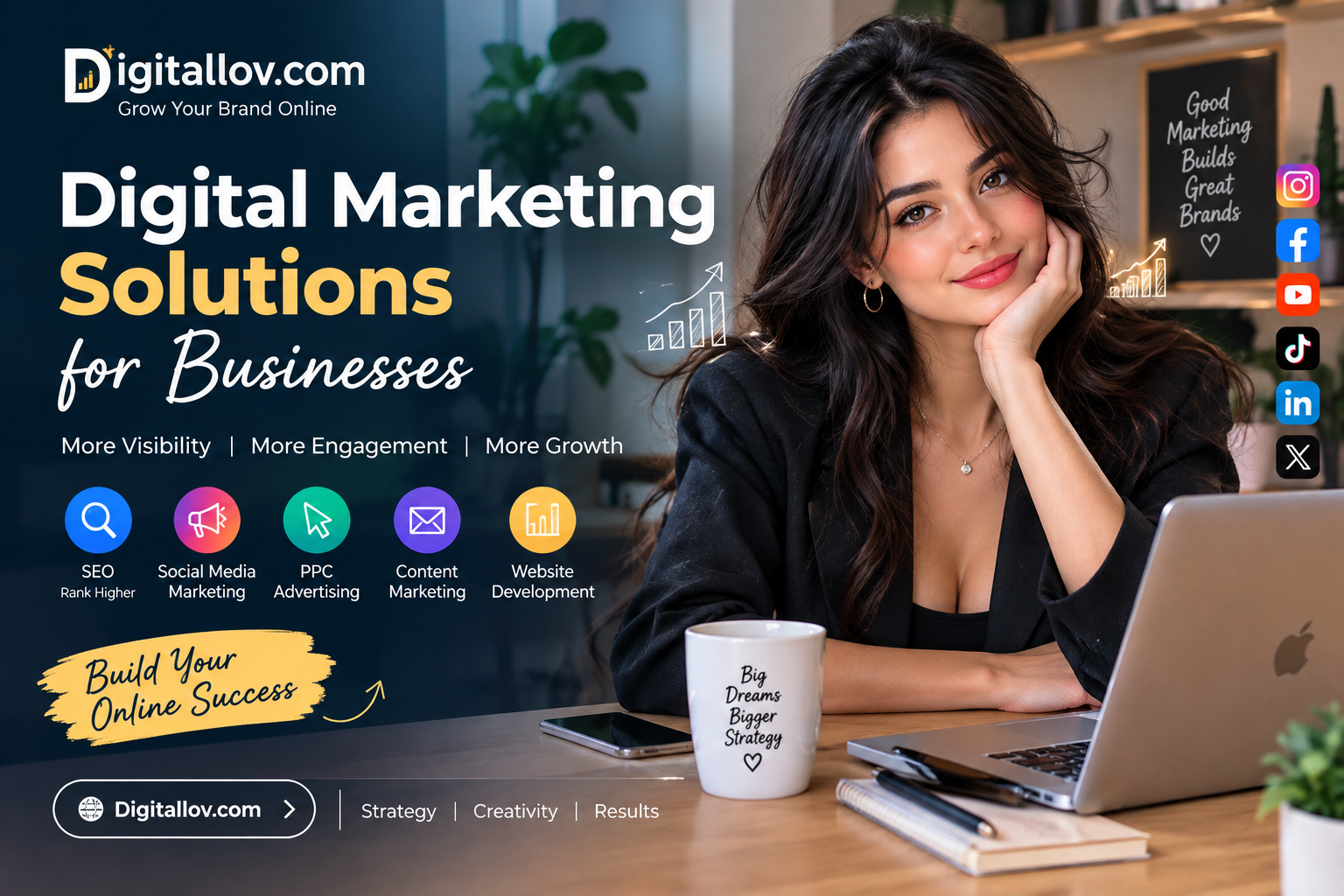
Online Marketing Solutions for Businesses
The way customers discover and interact with businesses has changed significantly. People now use search engines, social media, websites, online reviews, videos, and digital platforms to research products and services before making purchasing decisions.
For businesses, this creates both an opportunity and a challenge. Simply having a website or social media account is not enough to compete effectively. Companies need a strategic online marketing approach that helps them reach the right audience, communicate their value, generate leads, and convert potential customers into buyers.
Online Marketing Solutions for Businesses provide a structured approach to building online visibility and supporting business growth. From SEO and content marketing to social media, paid advertising, local marketing, and conversion optimization, businesses can use multiple digital channels to create a stronger presence online.
What Are Online Marketing Solutions for Businesses?
Online marketing solutions are strategies and services designed to promote a business through internet-based channels.
These solutions can include:
- Search Engine Optimization (SEO)
- Social Media Marketing
- Content Marketing
- Search Engine Marketing
- Pay-Per-Click Advertising
- Local SEO
- Lead Generation
- Website Marketing
- Conversion Rate Optimization
- Email Marketing
- Online Brand Promotion
- Performance Marketing
- Digital Marketing Strategy
The right combination depends on the company's industry, target customers, location, competition, budget, and business goals.
A professional online marketing strategy connects these channels rather than treating each one as an isolated activity.
Why Businesses Need Online Marketing
Customers are increasingly using online channels throughout the buying journey.
They may discover a company through a Google search, visit its website, check social media profiles, read reviews, compare competitors, and then contact the business or make a purchase.
This means businesses need to be visible and credible across the digital journey.
Increase Business Visibility
One of the primary goals of online marketing is to make a business easier to discover.
SEO, social media, content marketing, and online advertising can help businesses appear in front of potential customers when they are searching for relevant products and services.
Greater visibility can create more opportunities for website visits, inquiries, and sales.
Reach Target Customers
Online marketing allows businesses to target specific audiences.
Businesses can focus on customers based on:
- Location
- Interests
- Search intent
- Demographics
- Online behavior
- Industry
- Purchasing needs
Targeted marketing can help businesses avoid wasting resources on audiences that are unlikely to become customers.
Generate More Leads
A strong online presence can create multiple opportunities for potential customers to contact a business.
Lead generation can involve:
- Contact forms
- Landing pages
- Consultation requests
- Phone calls
- Online inquiries
- Newsletter registrations
- Product purchases
The objective is to turn online attention into meaningful business opportunities.
Build Brand Awareness
Customers are more likely to remember businesses that consistently communicate their value.
Online marketing can help companies maintain consistent messaging across websites, social media, advertisements, and content.
Over time, this can contribute to stronger brand recognition.
Key Online Marketing Solutions for Businesses
1. Search Engine Optimization
SEO is a long-term strategy for improving a website's visibility in search engine results.
Professional SEO can include:
- Keyword research
- Search intent analysis
- On-page optimization
- Technical SEO
- Content optimization
- Internal linking
- Local SEO
- Competitor analysis
- Website performance improvements
The goal is to attract relevant users who are actively searching for products, services, or information related to the business.
Unlike paid advertising, organic search visibility can continue generating traffic after content and pages have been properly optimized.
2. Social Media Marketing
Social media allows businesses to communicate directly with their audiences.
Online marketing strategies for social platforms can include:
- Content creation
- Social media management
- Audience engagement
- Community building
- Promotional campaigns
- Social advertising
- Brand awareness campaigns
Businesses should focus on the social platforms that are most relevant to their target customers.
Consistent and useful content can help businesses build awareness and maintain relationships with potential customers.
3. Content Marketing
Content marketing helps businesses educate their audiences while increasing online visibility.
Common forms of business content include:
- SEO blogs
- Guides
- Articles
- Videos
- Product content
- Service pages
- Case studies
- Social media posts
- Educational resources
High-quality content can answer customer questions, demonstrate expertise, support SEO, and help potential customers make informed decisions.
Content and SEO Working Together
Content marketing and SEO can work together effectively.
Keyword research can identify what customers are searching for. Businesses can then create useful content that addresses those searches.
For example, a digital marketing company could create content around:
- Digital marketing services
- SEO services
- Social media marketing
- Online advertising
- Business growth strategies
- Lead generation
This creates opportunities to attract relevant search traffic while providing useful information to potential customers.
4. Paid Online Advertising
Paid advertising allows businesses to reach targeted audiences quickly.
Depending on the business, online advertising can include:
- Search ads
- Social media ads
- Display advertising
- Remarketing
- Product advertising
- Lead generation campaigns
Professional campaign management focuses on audience targeting, advertising messages, budget allocation, landing pages, and conversion tracking.
Regular optimization can help improve campaign efficiency over time.
5. Local Online Marketing
Local businesses can benefit significantly from location-based online marketing.
A local strategy can help businesses appear when potential customers search for services in their area.
Local marketing may include:
- Local SEO
- Google Business Profile optimization
- Location-based keywords
- Local landing pages
- Customer reviews
- Local content
- Local advertising
For restaurants, salons, agencies, retailers, consultants, clinics, repair businesses, and other local companies, online visibility can contribute directly to customer acquisition.
6. Lead Generation Marketing
Generating traffic is only one part of online marketing.
Businesses also need systems that encourage visitors to take action.
Lead generation strategies can use:
- Landing pages
- Contact forms
- Calls to action
- Free resources
- Consultation offers
- Social media campaigns
- Search advertising
- Content marketing
A typical lead-generation journey can be:
Search → Website → Engagement → Inquiry → Lead → Customer
Optimizing each stage can improve the overall customer acquisition process.
7. Website Optimization
A business website is often the center of its online marketing strategy.
Even a successful advertising or SEO campaign can produce poor results if the website is difficult to use.
Website optimization can focus on:
- Mobile responsiveness
- Page speed
- Navigation
- Website structure
- Landing pages
- Calls to action
- User experience
- Clear service information
- Conversion opportunities
A professional website should make it easy for visitors to understand the business and take the next step.
Online Marketing Solutions for Small Businesses
Small businesses often operate with limited budgets, making strategic online marketing especially important.
Instead of trying to use every marketing channel, small businesses can focus on the platforms that are most relevant to their customers.
For example, a local service business may prioritize local SEO, Google visibility, social media, and lead generation.
An online store may focus more heavily on product SEO, paid advertising, social media, content marketing, and conversion optimization.
The goal is to use marketing resources strategically.
Online Marketing for Startups
Startups need to establish visibility and credibility while attracting their first customers.
Online marketing can help startups build:
- Brand awareness
- Search visibility
- Website traffic
- Social media presence
- Customer engagement
- Lead generation
- Online authority
A startup can begin with a focused strategy and expand its marketing activities as the business grows.
Online Marketing for E-Commerce Businesses
E-commerce businesses compete for attention across search engines, social media, shopping platforms, and digital advertising channels.
Effective online marketing can include:
- Product SEO
- Category page optimization
- Content marketing
- Social media marketing
- Search advertising
- Product advertising
- Retargeting
- Email marketing
- Conversion optimization
The objective is to attract shoppers and provide a smooth path from product discovery to purchase.
Online Marketing for Local Businesses
Local businesses can use digital marketing to reach customers within specific geographic areas.
A strong local strategy can combine:
- Local SEO
- Google Business Profile
- Customer reviews
- Local content
- Social media
- Search advertising
- Location-specific landing pages
This can help businesses convert local searches into calls, visits, inquiries, and sales.
Online Marketing for B2B Companies
B2B companies often require a different approach because their purchasing decisions can involve multiple people and longer sales cycles.
B2B online marketing can include:
- SEO
- Industry-specific content
- LinkedIn marketing
- Lead generation
- Case studies
- Search advertising
- Email marketing
- Educational resources
The goal is to demonstrate expertise, build trust, attract qualified prospects, and support the decision-making process.
Measuring Online Marketing Performance
One of the major advantages of online marketing is the ability to track performance.
Businesses can measure:
- Website traffic
- Organic search traffic
- Search rankings
- Leads
- Conversion rates
- Cost per lead
- Customer acquisition cost
- Social engagement
- Advertising performance
- Sales
- Return on advertising spend
The right metrics depend on the business objective.
For example, an awareness campaign may focus on reach and engagement, while a lead-generation campaign may focus on qualified inquiries and cost per lead.
Why a Customized Online Marketing Strategy Matters
Every business is different.
A strategy that works for an e-commerce store may not work for a local restaurant. A B2B company may need a completely different approach from a fashion brand or professional service provider.
A customized strategy considers:
- Business goals
- Target audience
- Customer behavior
- Industry competition
- Geographic market
- Marketing budget
- Existing online presence
- Customer journey
- Marketing channels
- Conversion objectives
This allows businesses to prioritize the strategies most relevant to their situation.
Benefits of Professional Online Marketing Solutions
A well-planned online marketing strategy can provide several advantages.
Greater Online Visibility
Businesses can increase their presence across search engines, websites, social media, and advertising platforms.
More Relevant Traffic
Targeted marketing can attract users who are more likely to need the company's products or services.
Increased Lead Opportunities
A strong digital presence can create additional opportunities for potential customers to make contact.
Stronger Brand Recognition
Consistent content and communication can help customers recognize and remember the brand.
Better Customer Engagement
Social media and content marketing allow businesses to communicate directly with their audiences.
Improved Marketing Decisions
Performance data allows businesses to understand which channels are working and where improvements are required.
Long-Term Business Growth
SEO, content, brand authority, customer relationships, and optimized websites can continue supporting business growth over time.
How to Choose the Right Online Marketing Solutions
Before investing in online marketing, businesses should clearly understand what they want to achieve.
Start by defining specific objectives.
For example:
Goal: Increase website traffic
Strategy: SEO + content marketing
Goal: Generate more leads
Strategy: SEO + paid advertising + landing pages
Goal: Increase local customers
Strategy: Local SEO + Google Business Profile + reviews
Goal: Increase online sales
Strategy: E-commerce SEO + paid advertising + conversion optimization
This goal-first approach helps businesses select the right marketing services instead of spending money on unnecessary activities.
Building a Long-Term Online Marketing Strategy
Successful online marketing requires consistency.
A strong strategy can follow this process:
Research → Strategy → Implementation → Measurement → Optimization → Growth
Research helps businesses understand customers and competitors.
Strategy determines the right channels and objectives.
Implementation launches campaigns.
Measurement evaluates performance.
Optimization improves results.
Growth comes from repeating this process and continuously improving the marketing system.
The Future of Business Marketing Is Online
Customers will continue to use digital channels to research businesses, compare products, communicate with brands, and make purchasing decisions.
Businesses therefore need to treat online marketing as an important part of their overall growth strategy.
Companies that consistently provide useful information, maintain strong digital visibility, communicate with customers, and optimize their marketing activities can create a stronger competitive position.
Conclusion
Online Marketing Solutions for Businesses provide a strategic way for companies to increase visibility, reach targeted audiences, generate leads, strengthen their brands, and support long-term growth.
From SEO and content marketing to social media, paid advertising, local SEO, lead generation, and website optimization, businesses can combine different digital channels according to their goals.
The most effective online marketing strategy is not simply about getting more visitors or followers. It is about reaching the right customers, providing value, building trust, and turning digital opportunities into measurable business results.
With a clear strategy, consistent execution, performance tracking, and continuous optimization, businesses can build a stronger online presence and create sustainable opportunities for growth.