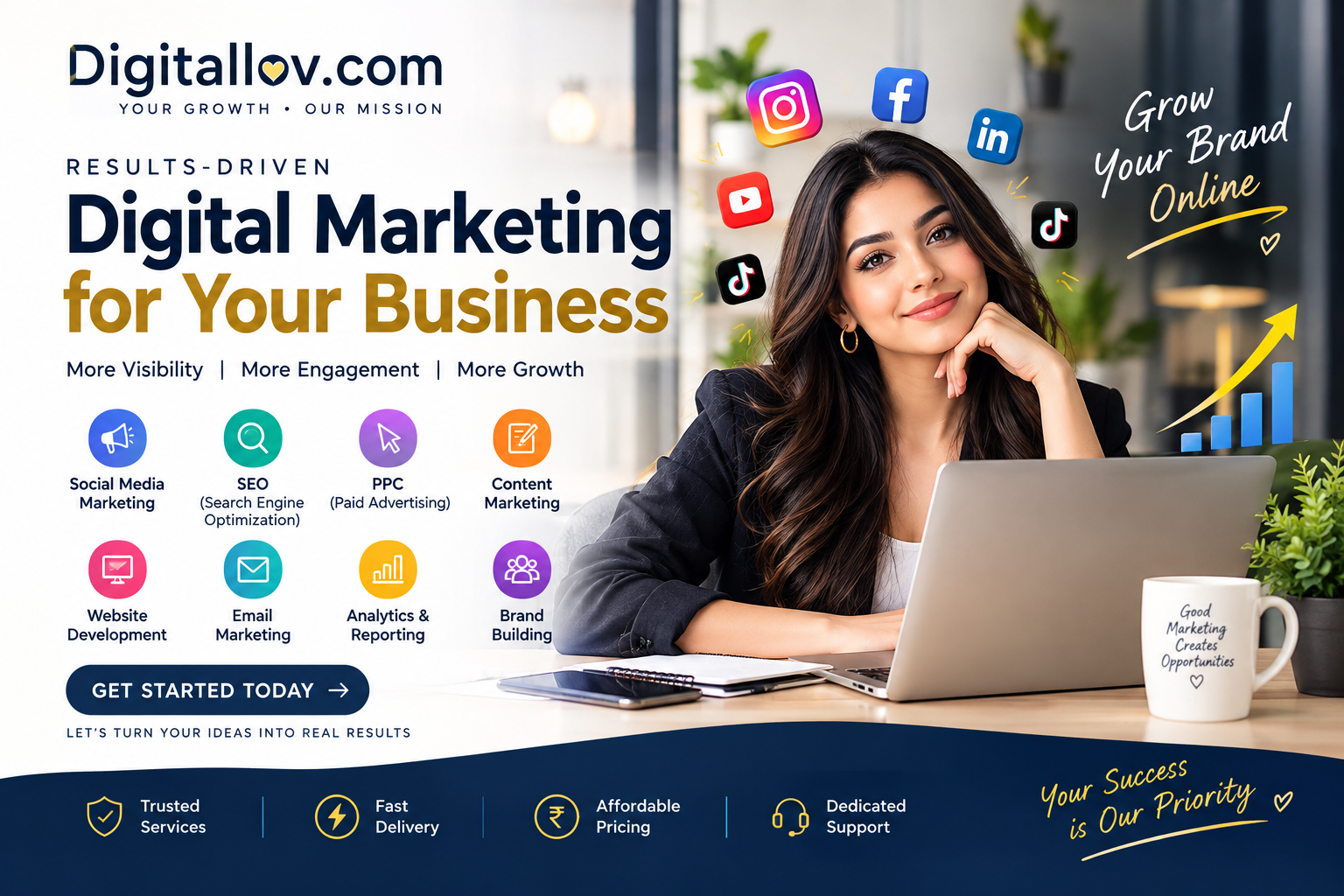
Strategic digital marketing
In today’s competitive online marketplace, simply having a website or social media account is not enough to grow a business. Brands need a clear strategy that connects marketing activities with real business goals. Strategic digital marketing services help businesses build a stronger online presence, reach the right customers, generate qualified leads, and improve conversions through carefully planned digital campaigns.
A strategic approach focuses on more than individual marketing channels. It brings together SEO, content marketing, social media marketing, paid advertising, branding, lead generation, analytics, and conversion optimization to create a complete digital growth system.
At Digitallov.com, businesses can use strategic digital marketing solutions to develop a stronger online presence while focusing on measurable and sustainable growth.
What Are Strategic Digital Marketing Services?
Strategic digital marketing services involve planning, implementing, monitoring, and optimizing online marketing activities according to specific business objectives.
Instead of randomly posting content or running advertisements, a strategic digital marketing approach starts by understanding:
- Business goals
- Target audience
- Customer behavior
- Market competition
- Search demand
- Brand positioning
- Marketing budget
- Sales objectives
- Conversion opportunities
The information is then used to create a customized digital marketing strategy.
Whether the goal is increasing website traffic, generating leads, promoting a new product, improving brand awareness, or increasing online sales, a strategic marketing plan provides direction.
Why Businesses Need a Digital Marketing Strategy
Digital marketing can provide excellent opportunities, but unplanned marketing can waste time and money. Businesses need a strategy that determines which platforms to use, what type of content to create, which audiences to target, and how performance should be measured.
A well-planned strategy can help businesses:
- Increase online visibility
- Reach targeted customers
- Generate qualified leads
- Improve website traffic
- Increase brand awareness
- Build customer trust
- Improve conversion rates
- Strengthen search engine rankings
- Reduce inefficient marketing spending
- Create long-term digital growth
Strategic marketing also makes it easier to identify what is working and what needs improvement.
Search Engine Optimization for Long-Term Visibility
SEO is an important part of strategic digital marketing services. Search engine optimization helps businesses improve their visibility when potential customers search for relevant products, services, or information online.
A comprehensive SEO strategy can include:
Keyword Research
Finding relevant search terms helps businesses understand what potential customers are looking for. Keywords should be selected according to search intent, competition, relevance, and business value.
On-Page SEO
Optimizing page titles, headings, content, URLs, internal links, images, and other website elements can help search engines better understand a website.
Technical SEO
Website speed, mobile usability, crawlability, indexing, site structure, and technical performance can influence the overall SEO experience.
Content Marketing
Creating useful, original, and search-focused content allows businesses to answer customer questions while targeting relevant search queries.
Local SEO
For businesses serving specific locations, local SEO can help improve visibility for location-based searches and attract nearby customers.
Social Media Marketing as Part of a Digital Strategy
Social media is another important component of strategic digital marketing. Platforms such as Instagram, Facebook, LinkedIn, YouTube, and other social networks allow brands to communicate directly with their audiences.
A strategic social media campaign should focus on more than posting regularly.
It should define:
- Target audience
- Content themes
- Posting strategy
- Brand voice
- Visual identity
- Engagement strategy
- Advertising opportunities
- Performance metrics
Businesses can use social media to increase brand awareness, showcase products, educate customers, build communities, and drive website traffic.
Performance Marketing for Measurable Results
Paid advertising can help businesses reach potential customers faster. However, successful advertising requires strategic planning.
Performance marketing can involve:
- Search advertising
- Social media advertising
- Display advertising
- Retargeting campaigns
- Lead generation campaigns
- Product advertising
- Conversion-focused campaigns
A strategic approach considers the customer journey before launching campaigns. Different audiences may require different messages depending on whether they are discovering a brand, researching a product, or preparing to make a purchase.
Content Marketing That Supports Business Goals
Content is one of the strongest tools available to modern businesses. However, publishing content without a purpose may not generate meaningful results.
Strategic content marketing connects every piece of content with a specific objective.
Content can include:
- SEO blogs
- Website pages
- Guides
- Social media posts
- Videos
- Infographics
- Case studies
- Product content
- Educational resources
- Email marketing content
High-quality content can improve search visibility while helping potential customers understand why a business, product, or service is valuable.
Lead Generation and Customer Acquisition
Generating website traffic is only one part of digital marketing. Businesses also need to turn visitors into leads and customers.
Strategic lead generation services focus on attracting people who are more likely to be interested in a company's products or services.
Lead generation strategies may include:
- Search engine optimization
- Paid advertising
- Landing pages
- Social media campaigns
- Content marketing
- Lead forms
- Email campaigns
- Remarketing
- Conversion optimization
The objective is to create a clear path from initial discovery to customer conversion.
Conversion Rate Optimization
A website can receive significant traffic without producing enough sales or enquiries. This is where conversion rate optimization becomes important.
CRO focuses on improving the experience visitors have after arriving on a website.
Businesses can improve conversions by optimizing:
- Landing pages
- Calls to action
- Contact forms
- Product pages
- Website navigation
- Mobile experience
- Page speed
- Trust signals
- Offers and messaging
Small improvements to the customer journey can make digital marketing campaigns more effective.
Data-Driven Digital Marketing
One of the biggest advantages of digital marketing is the ability to measure performance.
Businesses can monitor metrics such as:
- Website traffic
- Search rankings
- Click-through rates
- Engagement
- Leads
- Conversion rates
- Advertising performance
- Cost per lead
- Customer acquisition
- Return on marketing investment
These insights allow marketers to identify successful campaigns and make informed improvements.
Instead of relying only on assumptions, businesses can use real performance data to make marketing decisions.
Strategic Digital Marketing for Small Businesses
Small businesses often have limited budgets and resources. This makes strategic planning even more important.
Instead of trying to use every marketing channel simultaneously, small businesses can focus on platforms that provide the greatest opportunity for their specific audience.
For example, a local service business may prioritize local SEO, Google visibility, social media, and lead generation, while an online store may focus more heavily on SEO, product content, paid advertising, social media, and conversion optimization.
A customized strategy helps businesses make better use of their available marketing budget.
Strategic Digital Marketing for Startups
Startups need to establish visibility and credibility while competing with existing brands. A strong digital marketing strategy can help startups build awareness and attract their first customers.
Startup marketing may include:
- Brand positioning
- Website optimization
- SEO
- Social media marketing
- Content marketing
- Paid advertising
- Lead generation
- Audience research
- Conversion optimization
The right strategy can help startups establish a strong digital foundation rather than relying entirely on short-term promotional campaigns.
Strategic Digital Marketing for E-Commerce Businesses
E-commerce businesses operate in a highly competitive environment. Customers have numerous options available online, so brands need to provide a strong reason for customers to choose them.
Strategic e-commerce marketing can combine:
- Product SEO
- Category-page optimization
- Social media marketing
- Paid advertising
- Retargeting
- Content marketing
- Influencer marketing
- Email marketing
- Conversion optimization
The goal is to attract potential buyers, build trust, reduce friction, and encourage repeat purchases.
Building a Strong Online Brand
Digital marketing is not only about traffic and sales. It is also about building a recognizable and trustworthy brand.
A consistent digital presence can help businesses develop stronger relationships with their audiences.
Brand-building activities can include:
- Consistent visual identity
- Professional website content
- Social media branding
- Educational content
- Customer-focused messaging
- Online reputation management
- Thought leadership
- Consistent communication
When customers repeatedly see useful and consistent content from a brand, familiarity and trust can increase over time.
Why Choose Digitallov.com for Strategic Digital Marketing?
Digitallov.com focuses on digital marketing solutions designed around business objectives rather than isolated marketing activities.
A strategic approach can bring multiple digital channels together, helping businesses create a more organized and measurable marketing system.
From SEO and social media marketing to content, paid campaigns, lead generation, and online brand promotion, the right combination depends on the business, audience, industry, and goals.
The objective should always be to build marketing activities that support real business growth.
How to Create an Effective Digital Marketing Strategy
A successful strategy generally follows a structured process.
1. Define Business Goals
Start by identifying what the business wants to achieve. Goals may include increasing sales, generating leads, improving visibility, launching a product, or growing brand awareness.
2. Understand the Target Audience
Research customer needs, search behavior, interests, challenges, and purchasing decisions.
3. Analyze Competitors
Understanding competitor positioning and marketing activity can reveal opportunities and gaps.
4. Select the Right Channels
Choose marketing channels according to audience behavior and business objectives rather than following trends blindly.
5. Create Valuable Content
Develop content that answers customer questions, demonstrates expertise, and supports the buyer journey.
6. Launch Campaigns
Implement SEO, social media, advertising, content, and other selected strategies according to the marketing plan.
7. Track Performance
Measure meaningful KPIs and identify which activities are generating the strongest results.
8. Continuously Optimize
Digital marketing is not a one-time activity. Campaigns should be tested, analyzed, improved, and adapted as customer behavior changes.
Strategic Digital Marketing Is About More Than Getting Traffic
Getting visitors to a website is useful, but traffic alone does not guarantee business growth.
The real objective is to attract the right audience, provide valuable information, establish trust, and guide potential customers toward taking meaningful action.
This is why strategic digital marketing combines visibility, engagement, conversion, and retention rather than focusing on a single metric.
A business may need SEO to generate long-term traffic, social media to build awareness, paid advertising to reach new audiences, content marketing to educate customers, and conversion optimization to turn visitors into leads.
When these activities work together, digital marketing becomes a complete growth strategy.
Conclusion
Strategic digital marketing services provide businesses with a structured approach to building online visibility, reaching targeted audiences, generating leads, increasing conversions, and developing long-term brand growth.
From SEO and social media marketing to content marketing, performance advertising, lead generation, and conversion optimization, every channel can play a role when it is connected to clear business objectives.
For businesses looking to build a stronger and more effective online presence, a strategic approach is often more valuable than simply doing more marketing.
With the right strategy, consistent execution, data-driven optimization, and customer-focused content, businesses can turn digital channels into powerful tools for sustainable growth.
Digitallov.com can be part of that journey by helping businesses approach digital marketing with strategy, purpose, and measurable goals.